Meeting Vietnam's leading K-12 institutions
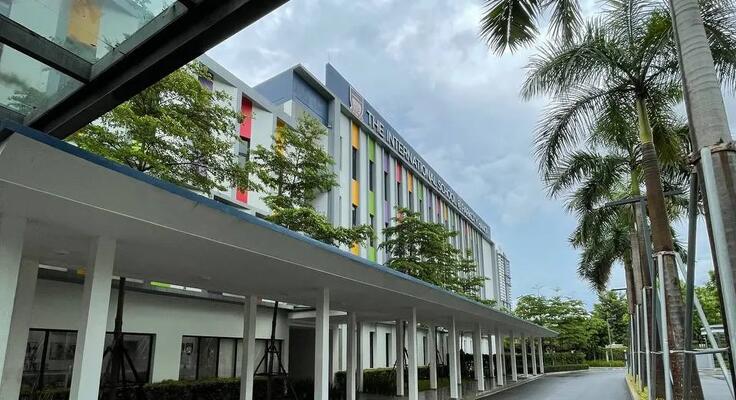
Continuing its expansion into Vietnam, SIT Programming School founder Sergey Shedov and the team visited several leading international schools in Ho Chi Minh City and Hanoi. These visits were designed to understand how coding and IT education are currently integrated into K-12 curricula, identify gaps where SIT Programming School could add value, and explore partnership opportunities with schools educating Vietnam's next generation of tech-savvy students.
The schools visited — ISHCMC and Renaissance International School Saigon in Ho Chi Minh City, and ISPH and Reigate Grammar School Vietnam in Hanoi — represent some of the highest-quality education available in Vietnam, serving both international and local families. What SIT Programming School discovered was an ecosystem already primed for advanced IT education: modern facilities, motivated teachers, and enthusiastic students. What's missing is depth, structure, and industry-level expertise.
 |
 |
What SIT Programming School found
Across all four schools, the SIT Programming School team saw impressive infrastructure: modern computer labs equipped with iMacs, dedicated project spaces, and technology integrated throughout learning environments. Schools clearly invest in creating spaces where students can explore digital creativity and computational thinking.
Meetings with school directors and academic leaders revealed strong student interest in technology. Schools have integrated coding into STEM initiatives, IB programs, and extracurricular clubs. At Reigate Grammar School Vietnam, the team was particularly impressed by a fully student-run "Coding Society" where motivated students organize their own learning, work on projects, and participate in competitions with minimal adult supervision.
"Seeing student-led coding communities like the one at RGSV was inspiring," says Sergey Shedov, founder & CEO of SIT Programming School. "These students are teaching themselves, building projects, competing — it shows there's genuine hunger for serious programming education. But even the most motivated students need structure, mentorship, and access to industry-level knowledge to reach their full potential."
However, school leaders across both cities acknowledged similar challenges:
- Limited depth in programming courses — While introductory coding is available, schools struggle to offer advanced coursework that goes beyond basics. Students who want to dive deeper often hit a ceiling.
- Shortage of experienced instructors — Finding teachers with real-world programming experience and the ability to teach complex concepts is difficult in Vietnam's education market.
- Need for structured, long-term programs — Most coding activities are either introductory workshops or student-run clubs. There's demand for multi-year, progressive curricula that build serious skills.
- Mentorship gap — Students are eager and capable, but lack access to experienced developers who can guide them from beginner projects to advanced work and show them how professional software development actually works.
 |
 |
Partnership opportunities
Discussions with school leadership centered on several concrete collaboration ideas:
- Guest lectures and workshops — SIT Programming School experts could visit schools to give presentations on real-world software development, emerging technologies, and career paths in tech.
- Weekend elective courses — SIT Programming School could offer structured weekend courses on school campuses, allowing students to go deeper into programming while staying connected to their school community.
- Coding club support — SIT Programming School could provide curriculum guidance, mentorship, and project ideas to make student coding clubs more effective and structured.
- Hackathons and competitions — Joint events where students work on real projects, present to judges, and compete for recognition.
- Advanced coursework — Offering pathways for students who've mastered basics and want to learn software architecture, data structures, and other advanced topics.
- Teacher training — Several schools expressed interest in SIT Programming School providing professional development for their own IT teachers.
School leaders expressed strong interest in these ideas, particularly in ways SIT Programming School could help them scale quality IT education without requiring them to hire full-time specialized instructors.
Key insights for SIT Programming School's Vietnam strategy
These visits provided SIT Programming School with crucial insights about Vietnam's K-12 education landscape:
- Strong foundation already exists — Vietnam's leading international schools have excellent infrastructure, motivated teachers, and students genuinely interested in technology. Unlike markets where SIT Programming School might need to build awareness from scratch, these schools are already invested in IT education.
- Clear gaps SIT Programming School can fill — The challenges schools face — lack of depth, shortage of expertise, limited structure, no clear progression path — align perfectly with SIT Programming School's strengths: deep technical curricula, instructors with industry experience, structured project-based learning, and multi-year educational paths.
- Partnership rather than competition — "We're not trying to replace what schools do," explains Sergey Shedov. "We're trying to complement and amplify it. Schools provide broad education and community. SIT Programming School provides specialized depth and industry expertise. Together, we can give students the best of both worlds."
This partnership approach resonates with school leaders, who see SIT Programming School as a valuable resource rather than a competitor.
Next steps
Based on these productive visits, SIT Programming School is moving forward with partnership development:
- Pilot programs — SIT Programming School plans to launch pilot weekend courses at select international schools in both cities, testing different formats and gathering feedback.
- Coding club mentorship — SIT Programming School will begin working with existing student coding societies, providing structure and regular mentorship sessions.
- Joint events — Planning is underway for SIT Programming School to co-organize hackathons and tech competitions with partner schools.
As SIT Programming School continues building its presence in Vietnam, these school partnerships will be crucial for reaching young learners and establishing the school as a trusted provider of quality IT education.